
About this project
The Dr. Phillips Urban Garden Project is an ongoing regenerative gardening initiative located in Central Florida (Zone 10A).
Started in February 2026, the project documents the transformation of a suburban growing space into a productive ecosystem that supports food production, pollinators, biodiversity, soil health, and community connection.
Through seasonal observations, ecosystem tracking, harvest records, and educational content, this project serves as a living case study exploring what is possible when we work with nature rather than against it.


Project Goals
The goal of this project is to demonstrate what's possible when we work with nature rather than against it.
Through regenerative gardening practices, ecosystem tracking, and seasonal experimentation, we're transforming a suburban backyard into a thriving edible ecosystem that grows food, supports wildlife, strengthens biodiversity, and reconnects people with the natural systems that sustain us.

Restore Soil

Support Biodiversity

Grow Food

Document and Share
Ecosystem Snapshot
February- August 2026
This living case study combines measurements, estimates and field observations. Missing observations are never treated as zero.

01
Soil Health
85% Soil Coverage
Mulch, living roots, and organic matter helping protect and build soil.
Recorded March 6
02
Biodiversity
4.2/5 Score
Based on seen pollinators, birds, butterflies, plant life, and living creatures hanging around the garden.
03
Food Production
Ongoing Seasonal Harvests
Tomatoes, cucumbers, herbs, flowers, berries, and more.
Recorded harvests
05
Pollinator Activity
Pollinator Observations
Bees, butterflies, and beneficial insects regularly visiting flowering plants even until the hot summer months.
Seasonal observation
04
Ecosystem Resilience
Perennial Plants Producing
Blueberries, blackberries, figs, citrus, and future food forest planning.
Seasonal observation
06
Wildlife Habitat
Growing Wildlife Presence
Cardinals, woodpeckers, nesting activity, and increased habitat value.
Qualitative observation

Monthly Snapshots & Observations
-
Increased pollinator activity
-
Cardinals nesting in bitter orange tree
-
Blueberries developing
-
Blackberry fruit ripening
-
Wildlife observations increase

April 2026
-
Harvested 1.93 pounds of red heirloom tomatoes.
-
Three cucumbers matured; three more continued developing.
-
Butterflies and carpenter bees visited flowering zinnias.
-
Black swallowtail caterpillars appeared on overflowing parsley.
-
Heat-stressed peas were composted; turmeric was transplanted.

June 2026
-
Consistent harvesting of blueberries, tomatoes, blackberries,
-
Flowers like zinnias, cosmos, vinca blooming
-
Multiple varieties of butterflies, bees, and pollinators visiting garden often
-
Cardinals snacking on blueberries from garden

May 2026
-
Purple tomatoes and colorful snack peppers ripened.
-
Pineapples yellowed; one fig reached ripeness.
-
Zinnias flourished across planters and grow bags.
-
Monarchs, swallowtails, and ladybugs visited the garden.
-
Flower seeds were collected for future planting.

July 2026
-
Purple tomatoes and colorful snack peppers ripened.
-
Pineapples yellowed; one fig reached ripeness.
-
Zinnias flourished across planters and grow bags.
-
Monarchs, swallowtails, and ladybugs visited the garden.
-
Flower seeds were collected for future planting.
-
Earlier visits reduced exposure to summer heat.
-
Marigolds surrounded 98% of trellised bed edges.
-
Multiple pineapples ripened; tops were saved.
-
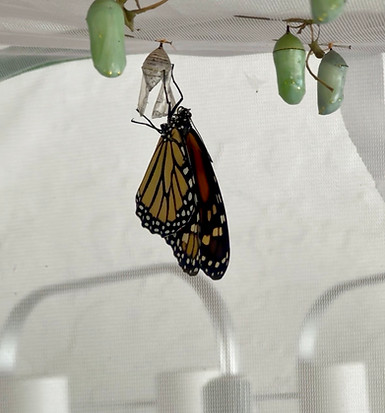
More than 15 monarch chrysalises were counted.
-
Eggplant fruited; birds visited; zinnia seeds saved.

August 2026
-
Frost damage assessment
-
Added 900 lbs compost
-
Installed cattle panel trellis
-
Planted tomato seedlings

February 2026
-
First larger tomato harvests
-
Cucumbers planted
-
Fertilization Began
-
Sweet potatoes reached ~40% bed coverage
-
Blackberries began flowering
-
First larger tomato harvests
-
Cucumbers planted
-
Fertilization begins
-
Sweet potatoes reached ~40% bed coverage
-
Blackberries began flowering

March 2026
-
Sweet potatoes we planted at the beginning of the season were harvested and enjoyed
-
50+ Monarchs found around the garden and placed in netting enclosure for protection
-
Eggplant still producing and flowering
-
Tumeric and ginger growing with eggplant and in farbic grow bag thriving
-
Tomatoes planted around garden beds with straw mulch
September 2026
-
Purple tomatoes and colorful snack peppers ripened.
-
Pineapples yellowed; one fig reached ripeness.
-
Zinnias flourished across planters and grow bags.
-
Monarchs, swallowtails, and ladybugs visited the garden.
-
Flower seeds were collected for future planting.
The Beginning
With the beds cleared, we’re starting fresh by rebuilding soil health and planning layered companion plantings for long-term regeneration.

This true reset begins beneath the surface. We started with 900 lbs of mushroom compost & cow manure to support beneficial microbes, nutrient cycling, and a thriving ecosystem.
We wanted to go into this project intentionally. We're planting UF/IFAS recommended plants for zone 10A, and choosing crops that support the existing ecosystem instead of fighting it.
After unexpected frost damage in zone 10A, we’re taking this as a reset moment by observing what survived and learning how to design a more resilient system.
