
What Living with the Land at Epcot Taught Me About Sustainable Agriculture (And Why It Still Matters)
Updated: Sep 2
There’s something quietly powerful about the Living with the Land ride at Epcot.
It’s not flashy. It’s not adrenaline-driven. It doesn’t compete with the roller coasters. Instead, it does something far more important: it slows you down and reminds you how beautiful growing food, and respecting our environment is.

I’ve always appreciated the ride, but this time it hit differently. I have been studying urban food production using sustainable practices, and applying these principles in my own garden, so I was intrigued to learn more about the Behindwhen I learned the team behind the Living with the Land ride at Epcot also apply sustainable agriculture principles in the lab.
It wasn’t theoretical. It was applied and the edible plants were thriving.

That experience inspired me to take my husband and mother-in-law on the Behind the Seeds tour, a deeper look into how Epcot at Disney experiments with innovative growing systems, water efficiency, biological pest control, and food production within limited space.
And what stood out most wasn’t the technology.
It was the mindset.

Sustainability in Action
Living with the Land showcases:
Hydroponic and aeroponic growing systems
Integrated pest management using beneficial insects
Crop innovation and hybridization
Water conservation practices
High-yield production in compact spaces

These aren’t just theme park exhibits for a ride. They represent real agricultural research and experimentation, and in fact, their research center partners with the United States Department of Agriculture (USDA).
The message is subtle but powerful:
We don’t have to choose between productivity and sustainability.
We can design systems that do both.

Behind the Seeds: The Details Matter
During the tour, we learned how their team carefully monitors:
Nutrient delivery systems
Pest pressure
Soil alternatives
Plant genetics
Environmental conditions
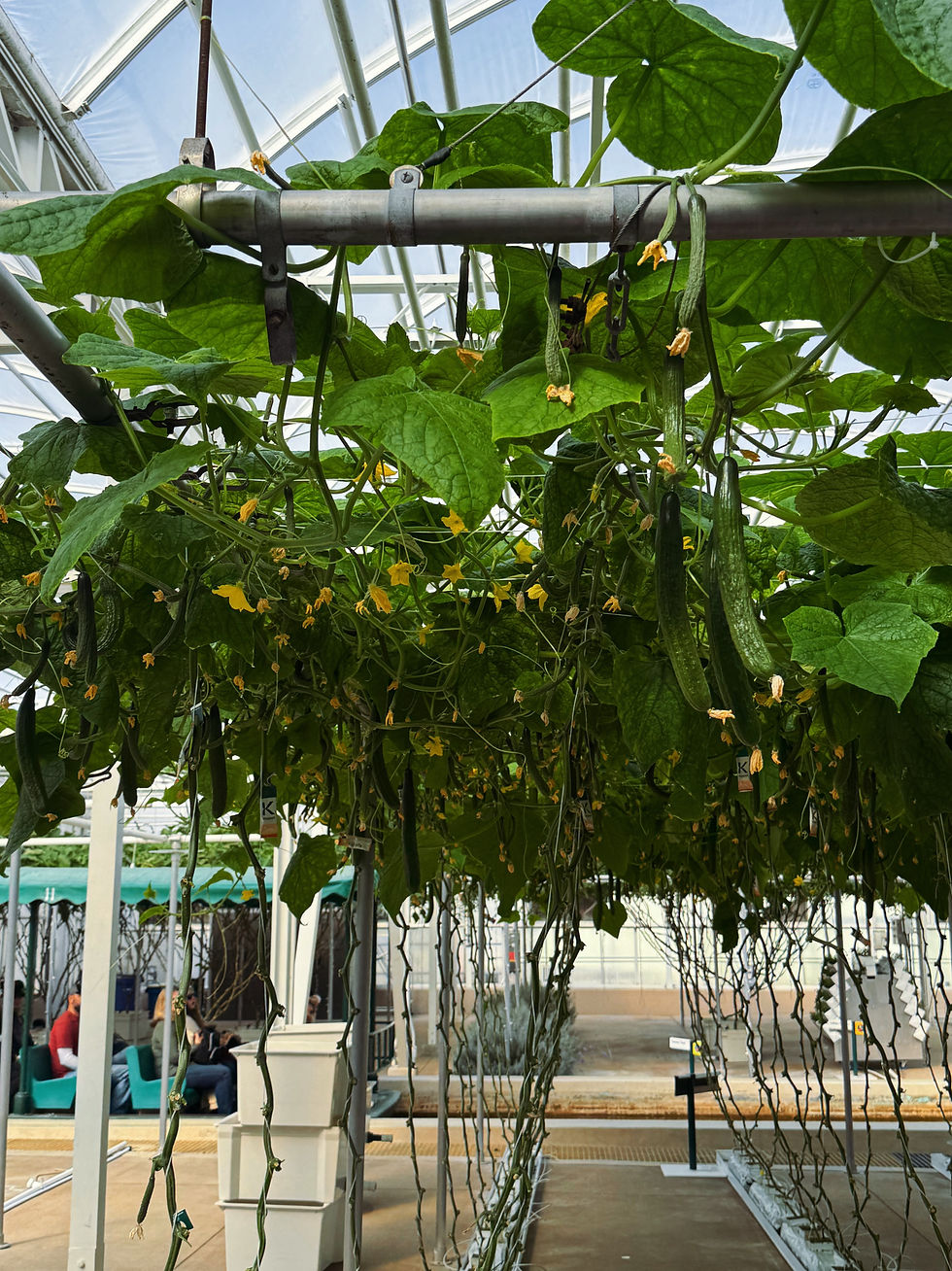
Everything is intentional.
Nothing is random.
And that’s the part that resonated with me the most.

Sustainable agriculture isn’t about being “natural” and hoping for the best. It’s about understanding systems like water systems, nutrient cycles, biodiversity, and energy use, and designing them intelligently.
What This Means for Urban Agriculture
You might not have a greenhouse the size of Epcot. But you do have access to the same principles.
Living with the Land demonstrates that:
Small spaces can produce significant yield.
Vertical growing increases productivity.
Integrated pest management reduces chemical dependence.
Water efficiency matters at every scale.
Innovation and ecology can coexist.

In urban gardens, whether that’s raised beds, container gardens, or hydroponic systems, we can apply those same ideas.
We can:
Track soil coverage and biodiversity.
Use companion planting and beneficial insects.
Capture and reuse water.
Optimize production per square foot.
Treat our garden like a living system, not just a hobby.
It doesn’t have to be industrial to be intentional.

A Personal Reflection
What I love most about Living with the Land is that it makes sustainability feel hopeful.
It doesn’t shame.
It doesn’t alarm.
It educates and inspires
It reminds us that innovation and ecology are not opposites, they’re partners. It’s possible, and even beneficial to work in harmony with nature.

Taking the Behind the Seeds tour with my family felt like bridging generations around something that matters: how we grow food, how we conserve resources, and how we design a future that works with nature rather than against it.
As I continue working on regenerative urban food systems in small spaces, I find myself thinking about those greenhouses.
Not because I want to replicate them exactly, but because they reinforce something simple:
Sustainability isn’t about perfection.
It’s about intention, experimentation, and learning.
And sometimes, inspiration starts on a boat ride through a greenhouse.

If you’ve experienced Living with the Land or the Behind the Seeds tour, I’d love to hear what stood out to you.
And if you’re growing food in a small space, what sustainable practices are you experimenting with?
Let’s keep building systems that nourish both people and the planet.


Comments