
March Garden Recap: Tomatoes, Trellis Systems & Ecosystem Growth in Zone 10A
March felt like the month when the garden truly began to wake up.
After weeks of rebuilding soil, recovering from unexpected frost damage, and preparing planting spaces, we started seeing the first signs that the ecosystem was responding. New growth emerged on fruit trees, pollinators began returning, harvests became more frequent, and our vertical growing systems started filling in.
One of the most rewarding parts of regenerative gardening is witnessing these small changes accumulate over time. What may seem insignificant on a single day becomes meaningful when viewed across weeks and seasons.
From Frost Recovery to New Growth
Earlier in the season, much of our focus was on frost recovery. During the first half of March, we continued cleaning up frost-damaged tropical plants around the front entryway and pool area while cutting back damaged perennial growth.
The exciting part?
Just a few weeks later, many of those same areas were beginning to show signs of life again. New green growth emerged on the fig trees, and the first yellow and purple blooms started returning throughout the landscape.
It was a powerful reminder that nature is remarkably resilient when given time and support.
Nearly Every Seed Sprouted
One of the biggest wins this month came from the flowers we started from seed.
The marigolds and alyssum we planted achieved an estimated germination rate of nearly 97%, filling garden beds with young seedlings that will eventually provide nectar, pollen, and habitat for beneficial insects.
Pollinator-friendly flowers play an important role in our regenerative garden strategy. While they add beauty and color, they also help support biodiversity and increase pollination throughout the growing space.
To further encourage pollinator activity, we planted a mix of zinnias alongside zucchini plants, creating a combination that supports both food production and ecosystem function.
Pollinators Are Finding the Garden
One of the most encouraging trends we noticed throughout March was the increase in pollinator activity.
Bees began visiting the newly planted citrus trees, and we even discovered a bee exploring a floral arrangement brought indoors. These observations may seem small, but they are important indicators that the garden is becoming more attractive and supportive to beneficial insects.
Healthy ecosystems rarely appear overnight. They develop gradually through layers of habitat, flowers, shelter, and food sources.
Each bee sighting is a reminder that the system is beginning to function as intended.
Building Vertical Growing Systems
March was also a month of structure.
We installed additional tomato trellises and continued training plants upward using twine supports. Vertical growing systems allow us to maximize production while improving airflow and reducing disease pressure.
The cucumbers responded especially well.
Bush cucumbers reached several sets of leaves and began producing flowers, while pickling cucumbers continued establishing themselves nearby. Throughout the month, we regularly trained cucumber vines onto the trellis to encourage healthy growth and make efficient use of space.
One of the simplest lessons in gardening is that plants often need guidance. By helping vines find their supports early, we can create healthier, more productive systems later in the season.
The First Meaningful Tomato Harvests
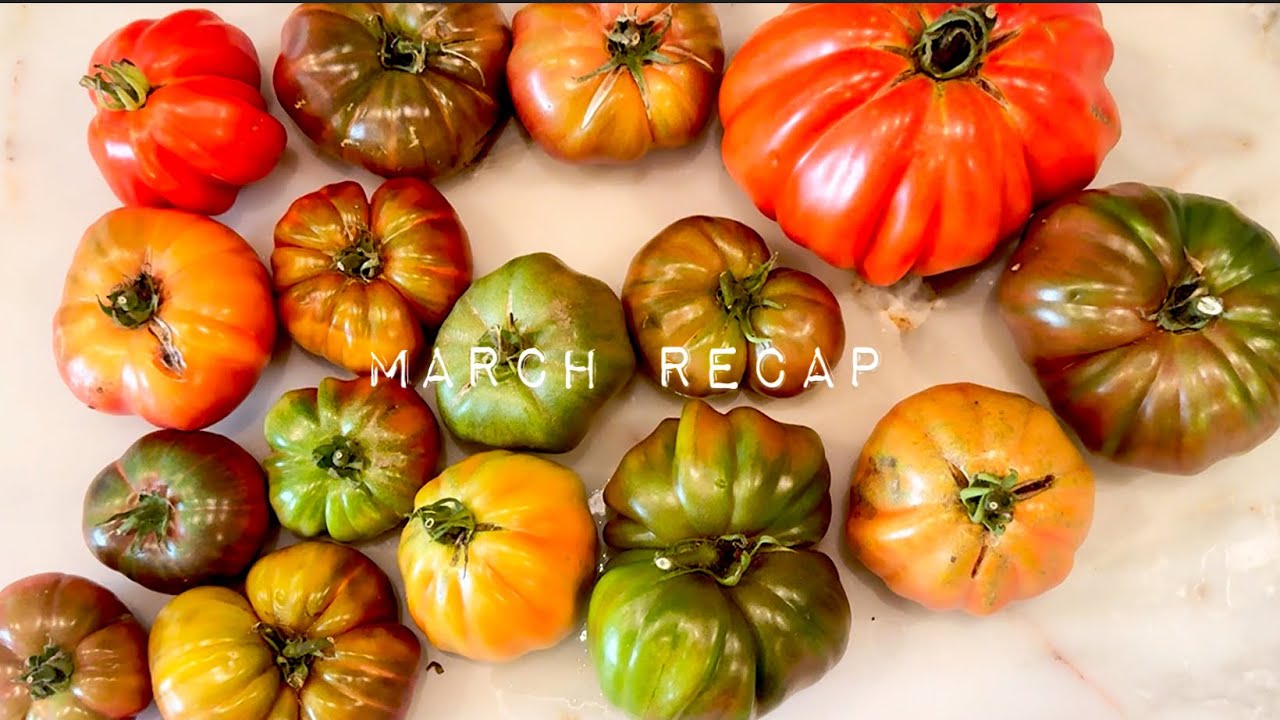
Perhaps the biggest milestone of the month was the beginning of consistent tomato harvests.
By mid-March, tomatoes were ready to pick, and by March 19th we harvested:
2.12 pounds of tomatoes
2.8 ounces of purple cherry tomatoes
At the same time, larger tomatoes were beginning to transition from green to orange, signaling that even larger harvests were on the way.
To support the increasing weight of the fruit, we reused mesh produce bags from kitchen scraps to provide additional support for heavy tomato clusters.
It's a small example of one of our favorite regenerative principles:
Create less waste by finding new uses for existing resources.
Propagating More Tomatoes
One of the most exciting experiments this month involved tomato propagation.
After successfully rooting ten tomato suckers in water, we transplanted each one into its own four-inch pot. These plants will eventually become a second generation of tomatoes grown from material the garden was already producing.
Gardening has a way of teaching abundance.
Thriving Companion Planting
Several companion planting combinations continued performing well throughout March.
Tomatoes, marigolds and radishes were all thriving together. The Mediterranean-inspired planting guild surrounding the olive tree( including sage and Cuban oregano I brought from my small space garden). continued establishing itself successfully. Bell pepper transplants were added to expand production while supporting biodiversity within the space.
These combinations help create a layered system where plants support one another while maximizing available growing space.
Looking Ahead
March felt like a turning point.
The garden is beginning to move beyond recovery and into a season of growth. Pollinators are returning. Trellises are filling in. Harvests are becoming more frequent. Fruit trees are waking up.
Most importantly, the ecosystem is becoming more connected.
Every flower, insect, fruit, vine, and harvest is part of a larger story, one that reminds us that healthy gardens are built through observation, patience, and consistent care.
As we move into the next month, we'll continue focusing on biodiversity, vertical growing, pollinator support, and building a resilient garden ecosystem from the ground up.
Because the most important work often happens beneath the surface long before we see the results.


Comments